More efficiency in CIP processes

CIP cleaning:
Shorter cycles. Less water. Same quality.

Comprex® optimizes the water rinse cycles in industrial CIP processes using targeted air-water pulses (or other rinsing media). This shortens cleaning cycles, significantly reduces water and media consumption and maintains consistently high cleaning quality.

Shorter CIP cycle time due to more efficient water rinse cycles
- %
Less water & energy per cleaning cycle
- %
Measurable

Reduced use of media - depending on the application

Retrofittable

Integration into existing CIP systems possible

The challenge

CIP often costs more than necessary

In food and beverage production, hygienic safety is non-negotiable. At the same time, manufacturers of consumer goods and personal care products face similar challenges: Traditional CIP cleaning processes consume large amounts of water, cleaning media and energy and lead to long downtimes, which have a direct impact on productivity.

The result: with rising operating and ancillary costs, productivity is becoming a decisive competitive factor for production sites.

Long water rinse cycles – for lack of a better alternative

Every hour of cleaning downtime means lost production. Conventional CIP processes often require extended water rinse cycles – not because they have to be, but because more efficient alternatives were not previously available.

High consumption of cleaning media

Caustic, acid, disinfectants and rinsing water – their use leads to considerable purchasing and disposal costs.

Water consumption under scrutiny

ESG reporting, water charges, disposal costs. Water-saving measures are increasingly becoming mandatory for industrial companies.

Growing cost pressure

Energy, water, chemicals, disposal – the operating costs per CIP cycle are rising. At the same time, there is growing pressure to measurably improve and document resource efficiency.

The Comprex® process

Pulses optimize the water rinse cycle in the CIP process

The patented Comprex® process uses targeted air-water pulses to mechanically remove product residues from industrial piping and production systems.

The water rinse cycles in the CIP process thus become significantly more efficient – the media requirement is reduced because the chemicals come into contact with a more thoroughly pre-cleaned surface and the use of chemicals in the CIP process can therefore be measurably reduced.

01

Integration into your CIP system

The stationary Comprex® unit is integrated directly into the existing CIP circuit and can be easily integrated into any standard control infrastructure – whether Siemens, Allen-Bradley or others. The conversion effort is minimal: usually connections and individual bypasses if necessary.

02

Pulses instead of flushing

Targeted air-water impulses mechanically remove product residues – faster and more thoroughly than conventional water rinsing.

03

Chemicals work more efficiently

Mechanical cleaning removes product residues more thoroughly than conventional water rinsing. The chemical phase thus meets a better pre-cleaned surface – lower chemical concentration and shorter exposure time lead to the same result.

04

Proof according to your standard

The cleaning result is visible and can be measured. Validation is carried out in accordance with your company’s internal procedures and requirements – we provide the basis for this.

Measurable results

Shorter CIP cleaning times. Lower costs. Same quality

From real customer projects – supplemented by an ongoing validation study by the Fraunhofer Institute, Germany (results Q2 2026).

- %
Shorter CIP cleaning cycles
Thanks to more efficient water phase
- %
Lower water consumption
Less energy for heating

Measurable
Reduced use of cleaning media
Application-dependent – on request
Retrofittable
Integration into existing CIP system
Stationary systems,
e.g. Pulse800
See Comprex® in action

See the difference for yourself

We will show you the Comprex® process live – in our technical centers in Landau/Germany or Cincinnati/USA or directly at your site. Bring the key parameters of your CIP process with you: cycle time, media use and water consumption. We will show you where the potential lies.

Conventional vs. Comprex®

Why production managers are switching

Criterion Conventional CIP Comprex® CIP
Cleaning time per cycle System-dependent Up to 50% shorter
Water consumption (rinsing & water phases) Very high Up to 90% less
Energy requirement (water heating) High Significantly reduced
Media requirement (caustic, acid, disinfection) High Measurably reduced
Hygiene result Established standard At least equally validatable
Validation & documentation Established processes Compatible with existing validation processes
Suitability for complex geometries Limited Fully suitable
Nominal diameter change & heat exchanger Requires special measures Fully compatible
In use across all industries

Many systems – one optimized cleaning process

Whether food and beverage production, consumer goods or the pharmaceutical industry: wherever product lines and process systems need to be cleaned regularly, the Comprex® process can make CIP processes more efficient.

What our customers say
Success stories from practice and partnership
Comprex® in use and in focus
Projects, specialist articles and practical results
culvertMunicipal

Cleaaning blocked culverts

Comprex pulses can be fed through a PE pipe into blocked, water-filled culverts until they are deposited.
Learn more
A close-up image of a rusted pipe section with a buildup of fibrous material blocking the interior, indicative of the need for pig cleaning, lying on a grassy surface.
Practical exampleWaste water

Discharge of coarse particles from pipes

Discharge of coarse particles from pipes
Learn more
Drainage pipesPractical example

Cleaning drainage pipes

Remove PFAS from extinguishing systems
Learn more
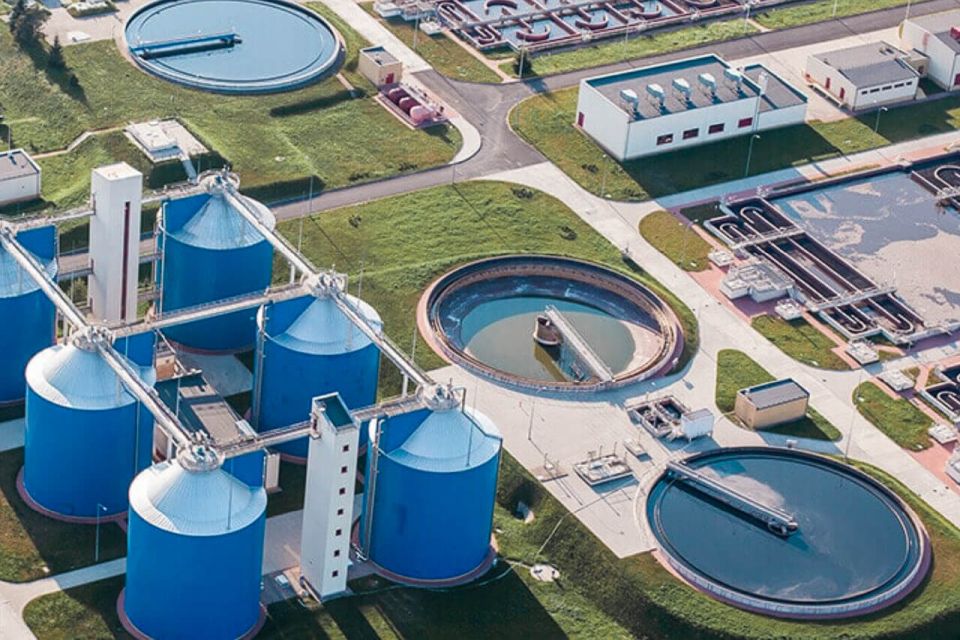
Aerial view of a Kommunal water treatment facility featuring blue cylindrical tanks and circular settling ponds on grassy terrain, showcasing advanced Impulse Rohrreinigung technology.
MunicipalPractical example

Large sewage treatment plant

The formation of deposits in sludge pipes led to an increased maintenance effort in plant operation. By using a stationary Comprex® unit, the time-consuming manual ...
Learn more
MunicipalPractical example

Large-scale sewage treatment plant

Cleaning of sludge pipes of the large sewage treatment plant of a European capital city
Learn more
Free comparative test
Send us your product – we will test it for you

No on-site effort, no obligation. Send us a product sample and a brief description of your current CIP process – we will carry out the comparative test in our technical center in Landau/Germany or Cincinnati/USA and present the results to you.

Versatile across industrial sectors

Discover more applications

Production systems
Production facilities,
product lines, process &
demineralized water lines,
pipelines
Heat exchanger
Plate heat exchangers,
shell and tube heat exchangers
Viscous media
For higher viscosities and demanding flow conditions
Answers to the most important questions

Frequently asked questions about CIP cleaning

What does CIP cleaning mean?

CIP (clean-in-place) cleaning is an automated cleaning process for industrial production facilities, piping systems and process engineering components, in which cleaning takes place without disassembly. Defined cleaning media are fed through the closed system to remove product residues, biofilm and deposits.
Areas of application for CIP cleaning: Food, beverage, pharmaceutical, chemical and consumer goods industries. The aim is to ensure reproducible cleaning results with minimum production downtime.

Compared to conventional CIP processes, Comprex® replaces parts of the water rinse cycle with targeted air-water pulses. This shortens cleaning times, reduces water consumption in the CIP process and reduces the use of chemicals.
At the same time, the cleaning quality is demonstrably maintained. In many applications, operating costs per CIP cycle can be measurably reduced.

Water consumption in the CIP process can be reduced by optimizing the water rinse cycle, shortening rinsing times and more efficient mechanical pre-cleaning. Technologies such as air-water pulses enable more thorough removal of product residues, so that less rinsing volume is required.

The CIP cleaning time is reduced if product residues are mechanically dissolved more quickly and the subsequent chemical phase is more efficient. Optimized process control reduces downtimes and increases production availability.

The operating costs of a CIP process are made up of water, energy for heating, chemicals, disposal and production downtime. In many companies, these costs represent a significant proportion of the ongoing production costs.

CIP cleaning is suitable for production plants, process lines, piping systems, heat exchangers, cooling and temperature control circuits as well as tanks and process engineering components.
Areas of application for CIP cleaning: Food, beverage, pharmaceutical and chemical industries. CIP is used here to reliably remove product residues and biofilm – even in complex geometries or areas that are difficult to access.

Yes, modern optimization solutions can be integrated into existing CIP systems. Retrofitting is typically carried out by integrating them into the existing CIP circuit and the existing control infrastructure.

Yes, the Comprex® process can be used in the CIP process not only with water, but also with other rinsing media. Media with higher viscosity (up to 100 cSt) can also be used as rinsing media.

You can find out more about applications with viscous media here: → Solutions for viscous media

If the medium used can cause potentially explosive atmospheres (hazardous area), the process can also be operated with inert gases instead of compressed air.

The cleaning effect is verified by measured values, documentation and comparison with the initial situation (baseline). Typical parameters are conductivity, pH value, microbiological tests or product-specific residue analysis.
Validation is carried out in accordance with the internal hygiene, quality and process requirements of the respective company and can be integrated into existing documentation systems.

Scroll to Top
Contact form

Thank you for your interest in our Comprex® process

Please note our privacy policy.