
CIP Cleaning in Modern Plant Operation
Discover how air-water pulses optimize CIP cleaning, reduce water, chemicals and downtime, and improve overall process efficiency.


Functioning extinguishing systems are an essential part of fire protection. Deposits can impair the function. They narrow the cross-section of the pipes. Mobilized particles from deposits clog nozzles. With Comprex® we create security.
There are basically three categories of extinguishing systems for stationary or fixed extinguishing systems:
With regard to deposits and comprex cleaning, the water extinguishing systems are in the foreground. Here again there are different versions:
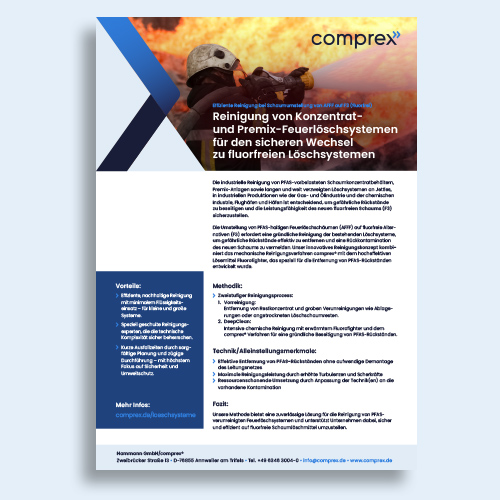
We also provide support when switching and cleaning to PFAS-free foams (from AFFF to F3).
You can find information on this in our one-pager “Cleaning concentrate and premix fire extinguishing systems for a safe switch to fluorine-free extinguishing systems”.
Extinguishing systems are ready for operation most of the time. In wet systems, water or water with additives stagnates. There is moisture in drying systems. Over time, solids can form in the form of loose particles or deposits. Corrosion products in pipelines made of unprotected, unalloyed steel are particularly critical.
Loose particles in pipes clog sprinkler heads or extinguishing nozzles in the event of fire. Deposits constrict the pipe cross-section and reduce the flow rate. They can also increase the actuating torques of hydrants. Regular inspections of the extinguishing systems are necessary to ensure their function and suitability. After all, this is the prerequisite for insurance cover.
If extinguishing systems are conspicuous during the inspection, it is necessary to clean the pipes together with the sprinkler and extinguishing nozzles and to make the fittings operational again. We can fulfill this task with Comprex® and, if necessary, with additional technology and restore the function.
Due to the different designs of extinguishing systems, inspection by our trained staff is required before cleaning. They determine preparatory work on the basis of investment plans. This preliminary planning includes the definition of feed-in and feed-out points for the comprex devices, conversion measures and the sequence of cleaning sections. Additional work may also need to be specified. Depending on the version, this includes removing the sprinkler heads or extinguishing nozzle or checking the actuating torques on fittings. The result of the preliminary planning is recorded in documents. They include plans for Comprex® cleaning and, if necessary, for additional maintenance work. Based on these plans, we can upgrade your extinguishing system properly and economically.
We document the results of our work. This provides you with proof of the function of your extinguishing system.
The term extinguishing system also stands for fire-fighting or fire-extinguishing system and is a permanently operational technical system that contains a fire with an extinguishing agent. Stationary or fixed extinguishing systems often consist of a piping system with suitable extinguishing water discharge devices, e.g. sprinkler heads or extinguishing nozzles, which discharge the extinguishing agent when needed. In the event of a fire, this is done either indirectly or directly, i.e. either indirectly by fire detection systems or directly by fire detection and triggering elements such as glass drums or fusible links. The systems are designed to automatically control a fire until the fire department arrives to extinguish it. The colloquial term “extinguishing system” is therefore rather misleading. This is why the literature often uses the terms fire-fighting or fire-extinguishing system.
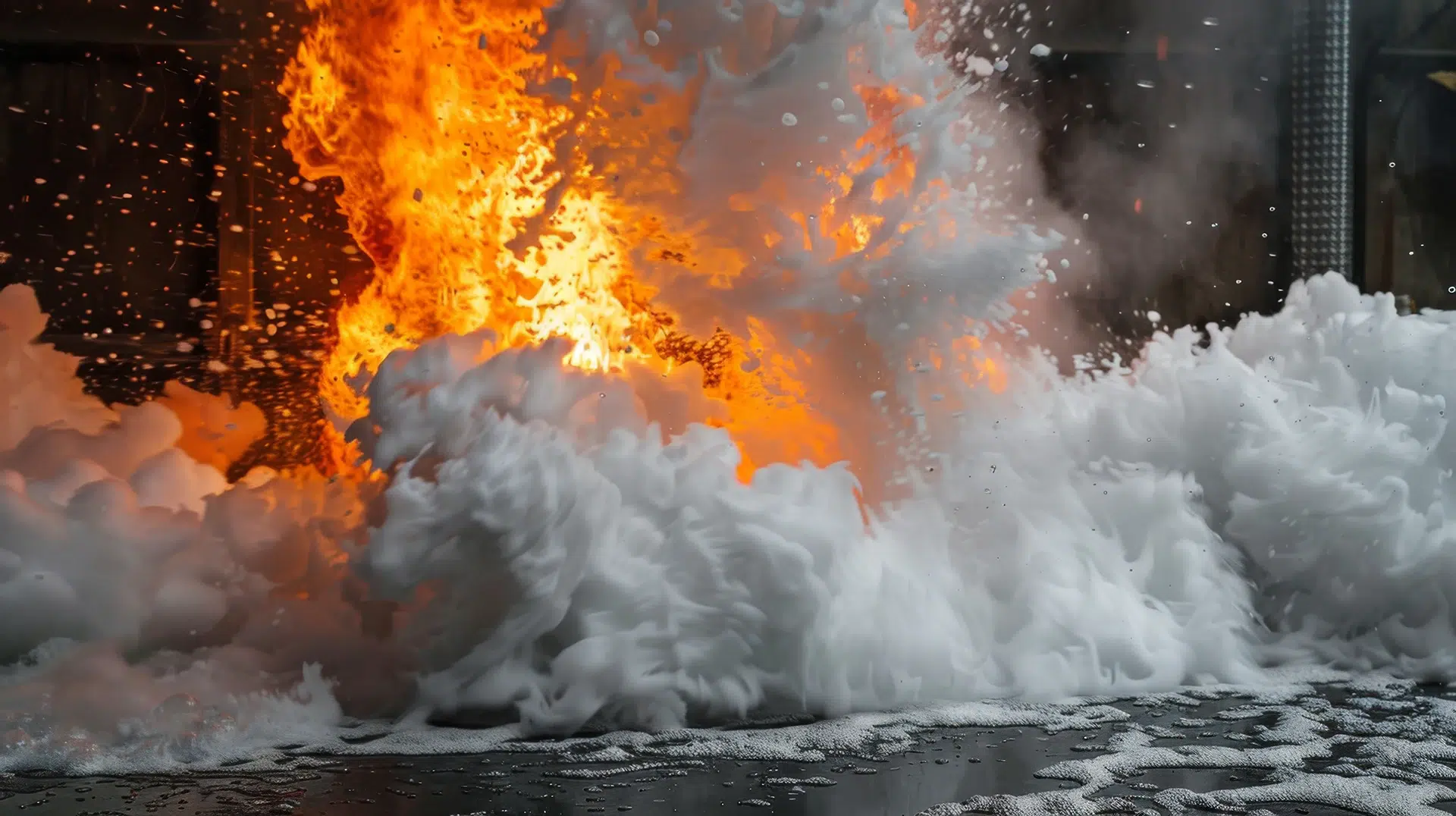
Extinguishing agents have the task of extinguishing flammable substances, taking into account their fire class and the prevailing environmental conditions (e.g. risk to persons or room size). Water extinguishing systems mainly use water alone, water with additives or extinguishing foam. Extinguishing foam is produced by adding air to water with foaming agent.
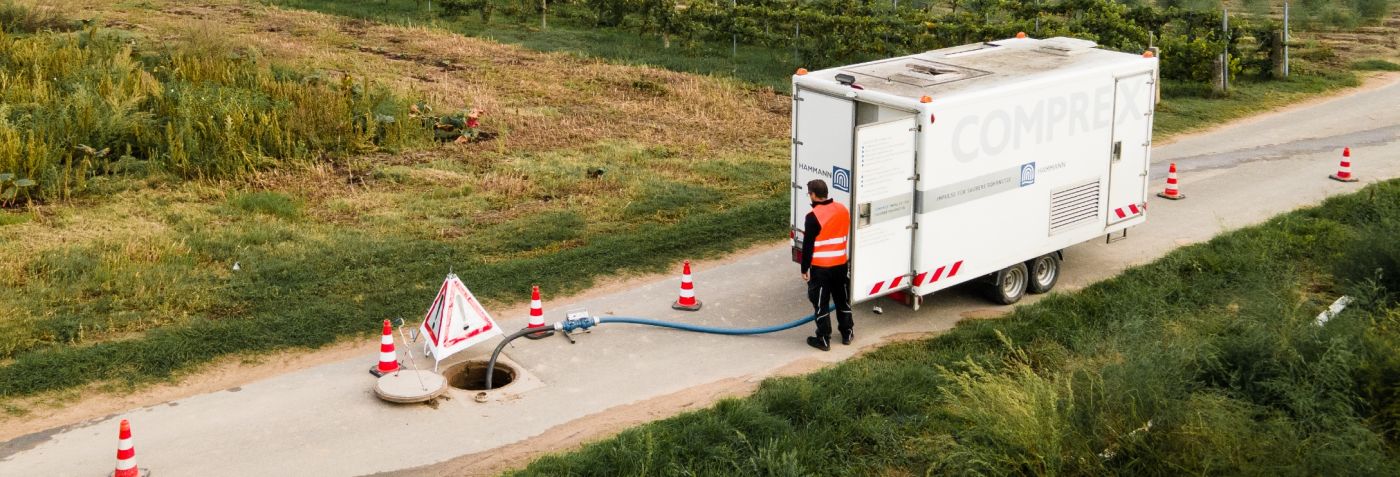
The Comprex® cleaning process is patented. It is based on the controlled addition of compressed air to pipelines and systems .
The result: improved flow rate – safe operation of the extinguishing system.
We regularly report on new developments and innovations.
Find out about our successful Comprex® applications.
Navigation
Thank you for your interest in our Comprex® process